
Avoca’s first ever vineyard
MACKERETH HOUSE
A VICTORIAN ORIGINAL.
EST. 1864.
Today the Pyrenees is regarded as one of Australia’s most distinguished and distinctive wine regions. But before the Pyrenees became wine country, there was Mackereth.
The man with the best claim to be the district’s pioneer wine maker was a farmer, Edwin Horatio Mackereth, born in Yorkshire in 1828. He worked on his father’s farm, until the prospect of gold and a new life lured him to Australia in the early 1850’s. Edwin and his German born wife Catherine settled on a block of virgin land about two kilometres west of Avoca which he named Hedon Farm in 1860.
EXPANSION AND INNOVATION.
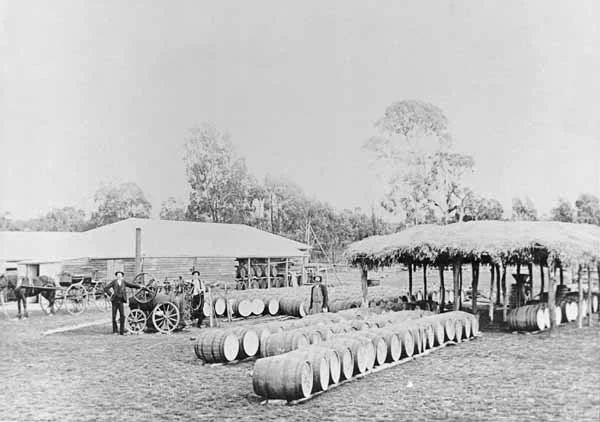
As late as the 1880’s when Great Western was already famous, the Pyrenees still had no wine industry to speak of. But Edwin Mackereth had plans. He was inspired by the new enthusiasm for viticulture and wine making that had been spread by the politicians and leading industry figures of the period. About 1887 he planted a small vineyard of three quarters of an acre. In 1890 the Government resolved to boost the wine industry and to this end they promised a bonus to vignerons intending to plant. Mackereth notified the Government of his intention to plant 14 acres and duly applied for a bonus. On 29 November, 1889, the newly appointed Government viticultural expert, Italian born and trained Romeo Bragato, visited the area at Mackereth’s invitation with a view to advising prospective growers on the suitability of the soils and climates for viticulture. Bragato’s report was extremely favourable. Part of the reason for this was the soil of the district, loamy on top with gravelling subsoil, noting that good and natural drainage - such as that which prevailed in Mackereth’s Land "suits splendidly for vine-growing".
THE MACKERETH HOUSE RANGE
The vines that Bragato considered best suited to the district were black Hermitage (shiraz), Burgundy (Pinot Noir), and Mataro for red wine, and Pinot, Verdelho and Riesling for white. The following year Bragato returned and noted Mackereth’s intention to plant 15 acres of vines, and to steadily increase the size of his vineyard year by year. Bragato raised the hopes of aspiring vignerons, claiming that Avoca was better adapted for wine growing than most districts in the colony.
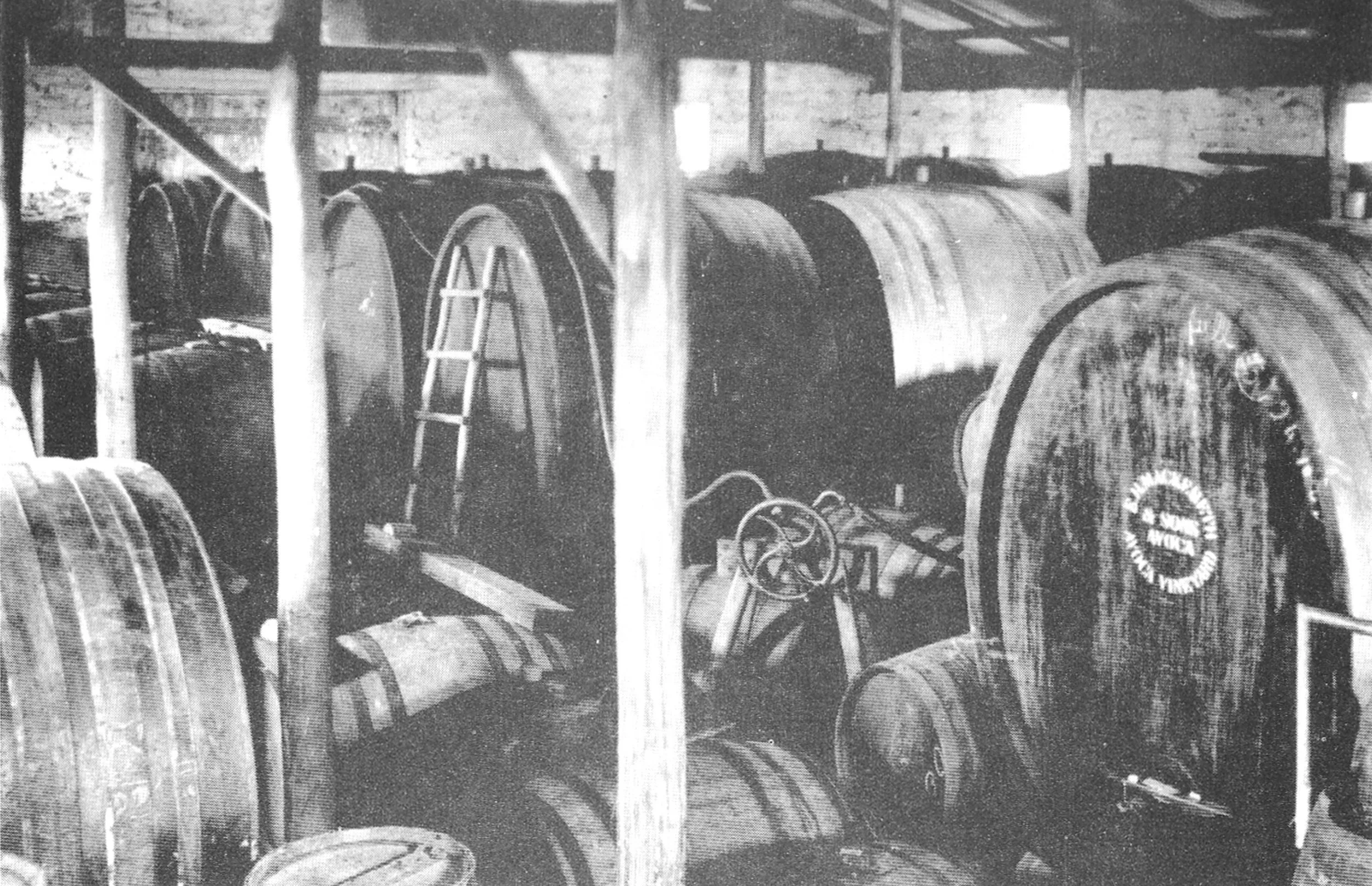
In 1890, Mackereth sold five dozen bottles at 14 shillings a dozen to the Wise’s general store in Avoca. Sons, Edwin, John and Charles, were proprietors of the Avoca Vineyard "from the great days of the nineteenth century until about 1930". Edwin, a member of the Victorian Police Force, resigned from Police work to become a vigneron; and John, a teacher of drawing and music, joined Edwin in 1908 after Charles died at the age of twenty-eight. Prior to this, they knew little about viticulture although they considered it highly profitable. They used the "Pinneau" (Pinot) for their red wines and also made Port from the same variety. Their wines met with great success and many proved to be prize-winners overseas. But problems arose: local consumption was limited and with costs mounting and income falling they found it difficult to afford the machinery necessary for an efficient enterprise. Some of the machinery they made themselves, even by “cutting gear cogs by hand from discs of red gum". In 1920, The Mackereth enterprise comprised 40 acres bearing vineyard, but these were lean years for the wine industry which saw the price of wine fall, moves towards prohibition, and the closure of many small wineries. The winery then "had a storage capacity in excess of 91,000 litres and supported three wine shops in Avoca. Eventually they could no longer survive as vignerons and began negotiations to sell out to Seppelts. The sale fell through … (and) Seppelts turned their attention to Hans Irvine’s Great Western vineyards …
Many years later another surviving Mackereth brother, Alfred, who was not a vigneron at all but a bank manager, recalled the fate of the property to wine historian Sam Benwell. The wine they had made was good but the consumers were too few. Costs were rising and income was falling. Producing wine efficiently required technology which was expensive. Broken parts were difficult to replace. In addition there were difficulties associated with frost and birds. It all became too much. In 1929 Mackereth sold the property.
The new owner was a dairy farmer, a Mr Dawson, who had no intention of carrying on the business of growing grapes or making wine. Given a declining market for wine why should he? Had wine making been a viable activity then undoubtedly the property would have found a buyer as a going concern. As it was John Mackereth sold the wooden casks and wine making equipment separately, some of them to another winery that had since sprung up in the district, Kofoed's. The large stone winery and cellar complex which was distinct from the homestead was not part of the sale. It survived a couple of years more until John Mackereth removed parts of the structure selling them at auction. This interesting industrial building which was admired by Romeo Bragato did not survive.
ROOTS DEEPER THAN VINES
For many decades, the old winery stood silent. But some stories have a way of finding their way home.
Today, the Mackereth legacy lives on through Mackereth House Wines, produced once again in Avoca, in the heart of Victoria’s Pyrenees wine region. The historic images, the signature label and the wines themselves all honour the legacy of the Mackereth family. Today each bottle carries something of the place where Edwin Horatio Mackereth first planted his vines more than a century ago, once again produced in Avoca only a few kilometres from the original Historic site of Mackereth House Historic Vineyard where the dedication to excellence, pioneering spirit and the craft continues.

Contact us,
Whether you’re seeking a particular vintage, would like to know more about our wines, or simply have a question about Mackereth House, we’d be delighted to hear from you. Our team is always happy to assist with enquiries, recommendations and wine orders.